

Performing Due Diligence
- Julie Montague
- Aug 25, 2025
- 5 min read
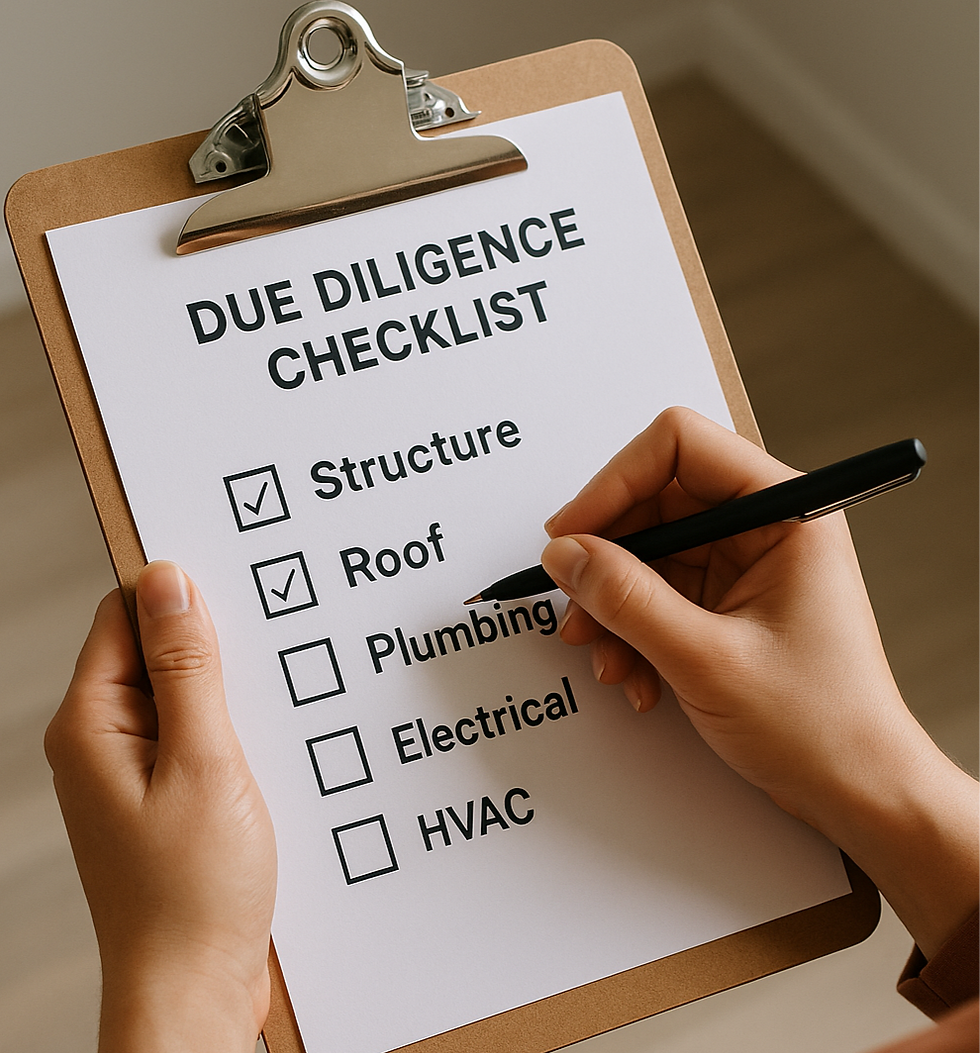
When buying an apartment building the potential rewards are substantial because multifamily real estate provides consistent income, tax advantages, and long term appreciation. Yet the risks are equally significant if proper due diligence is not performed. The process of due diligence is meant to uncover the real condition of the property, the true financial performance, and the potential liabilities that may not be obvious during a first inspection. Investors who approach this process with care can avoid costly surprises and position themselves for stronger returns.
The starting point in due diligence is a full understanding of the property’s financial records. Rent rolls must be compared with leases to ensure that the tenants listed are accurate and that the income being reported is actually collected. Many investors make the mistake of assuming the stated rents are correct without verifying deposits and lease agreements. Operating expenses also require a careful eye. Owners may present financial statements that exclude certain recurring costs such as management fees, regular maintenance, or utilities paid on behalf of tenants. Comparing reported expenses to market averages is one way to identify if items are understated. For instance, if the insurance or property tax figure seems unusually low, it may be because the current owner has exemptions or outdated policies that will not carry over to a new buyer.
Physical inspections form the second critical part of due diligence. Buildings age differently depending on maintenance, climate, and quality of construction. A professional inspection should include the roof, foundation, plumbing, electrical systems, and heating or cooling equipment. Deferred maintenance on these systems can cost hundreds of thousands of dollars if overlooked. Cosmetic improvements can make a property appear attractive on the surface while hiding major structural concerns. Walkthroughs of units can reveal leaks, mold, or tenant damage that will require significant repair. Checking city permits and code compliance records helps confirm whether prior renovations were performed legally. Investors who rely only on the seller’s description without commissioning their own professional inspections often regret the oversight later.
Another essential area of due diligence is tenant quality and lease terms. A property with high rents is only valuable if tenants actually pay on time and renew leases. Reviewing payment history and eviction records can highlight whether the building has a stable tenant base or a revolving door of problem tenants. Lease structures also matter. Month to month leases may provide flexibility to raise rents but they also carry the risk of sudden vacancies. Long term leases may keep occupancy stable but limit the ability to adjust to market rents. Understanding tenant mix, such as families, students, or short term rentals, can reveal whether the income is dependable.
Local market research cannot be ignored. An apartment building may look strong on paper but still underperform if it sits in a declining neighborhood. Market due diligence means studying job growth, population trends, crime statistics, school quality, and new construction nearby. If many new buildings are being added to the market, rents may be pressured downward. Conversely, if a neighborhood is seeing strong employment growth and limited supply, there may be room for rent increases. Investors who purchase without considering broader market conditions often find themselves disappointed when expected income does not materialize.
Financing terms are also part of due diligence. Lenders will perform their own underwriting but investors should not rely solely on bank approval as a sign of safety. Interest rate structures, amortization schedules, prepayment penalties, and reserve requirements can all impact cash flow. Stress testing the numbers under different vacancy or expense assumptions helps ensure the property remains viable under less than perfect conditions. Many buyers project future returns assuming everything will go according to plan, yet experienced investors know that problems inevitably arise. A conservative financial model provides protection.
Legal review rounds out the due diligence process. Title searches confirm that ownership is clear of liens or disputes. Zoning checks confirm that the building is being used legally and that future improvements are allowed. Environmental assessments identify potential issues with contamination or asbestos that could lead to lawsuits or remediation costs. Involving an attorney who specializes in real estate can prevent costly mistakes that an investor may not see.
The due diligence period is not simply a formality but a chance to renegotiate or even walk away if serious issues are uncovered. Sellers often expect buyers to find concerns, and adjustments to the purchase price or terms are common. Entering the process with the mindset of discovery rather than blind confirmation creates stronger investment outcomes.
The Most Common Mistakes Investors Make
Despite the importance of due diligence, many investors fall into predictable errors that undermine their deals. The most common mistake is failing to verify financial information. Sellers may present attractive numbers that hide delinquent rent, inflated income, or understated expenses. Accepting these reports at face value without comparison to leases, tax records, and bank deposits creates false expectations of cash flow.
Another frequent error is underestimating repair and maintenance costs. Investors often focus on the purchase price and projected rent while ignoring the ongoing costs of ownership. Small leaks, aging systems, and neglected maintenance can accumulate into significant expenses. Without a professional inspection and realistic capital expenditure budget, investors can quickly find themselves spending more on repairs than they planned.
Rushing through the process is another pitfall. Competitive markets sometimes pressure buyers to move quickly to secure a property, but skipping steps can lead to disastrous results. Taking the time to review every document, walk through every unit, and consult with experts ensures that surprises are minimized. Patience is often rewarded with better deals and more confidence in the investment.
Some investors also neglect the importance of tenant quality. A building with high occupancy may look stable, but if many tenants have poor credit or inconsistent payment histories, the cash flow will be unreliable. Reviewing actual payment records is just as important as checking the rent roll.
Overlooking local market conditions is another common error. A property may look good in isolation but perform poorly in a weak market. Investors who buy without analyzing neighborhood trends, employment growth, or competing supply may end up with a building that struggles to retain tenants.
A subtle but significant mistake is overconfidence in appreciation. Many buyers justify weak cash flow with the assumption that property values will rise. While real estate often appreciates over time, relying solely on future value to justify a purchase is risky. Conservative investors ensure that a property makes sense on current income, with appreciation as a potential bonus rather than the only exit strategy.
Due diligence is the safeguard between a good investment and a costly mistake. Performing it with due diligence and patience allows investors to uncover hidden risks and negotiate from a position of strength. Avoiding the common mistakes of skipping verification, underestimating costs, and rushing the process gives buyers the best chance of success. Apartment buildings can be powerful wealth building assets, but only for those who approach them with discipline and care.


Comments